




Configuration change | 04 June 2026
Practical Guidance for Managing Engineering Changes with Confidence
Published by Asset Guardian
Engineering change is essential in asset-intensive industries, but without clear visibility and control, even small changes can introduce risk. This article explores practical ways organisations can strengthen change management, improve traceability, and support safer, more predictable operations.
Engineering change is a constant in asset intensive industries. Systems are modified to address safety concerns, improve performance, replace ageing components, or respond to operational requirements. While change is necessary, it can also introduce risk when it is not managed with sufficient visibility and control.
In complex industrial environments, engineering changes rarely affect a single component in isolation. Control systems, software versions, configurations, and physical assets are often tightly interconnected. Without a clear understanding of these relationships, even well intentioned changes can have unintended consequences.
Why Engineering Change Is Challenging
Many organisations operate environments that have evolved over long periods of time. Documentation may be incomplete, ownership may be fragmented across teams, and institutional knowledge may sit with individuals rather than systems.
Common challenges include:
- Limited visibility of system dependencies and configurations
- Changes implemented under time pressure with minimal documentation
- Inconsistent approval and review processes
- Difficulty understanding the cumulative impact of multiple small changes
These challenges do not usually reflect a lack of care or competence. They are often the result of complexity and operational realities.
Where Risk Commonly Emerges
Risk in engineering change typically arises when teams lack confidence in what is currently installed, how systems are configured, or how a proposed change interacts with existing assets. This can lead to outcomes such as:
- Unexpected behaviour following maintenance or upgrades
- Difficulty rolling back changes when issues occur
- Reduced confidence during audits or investigations
- Increased reliance on reactive troubleshooting
Over time, repeated small changes without clear oversight can erode overall system understanding.
Supporting More Confident Change Management
Managing engineering change more effectively does not require excessive bureaucracy. Instead, it relies on clearer information, shared understanding, and consistent processes that support decision making.
Practical steps organisations may consider include:
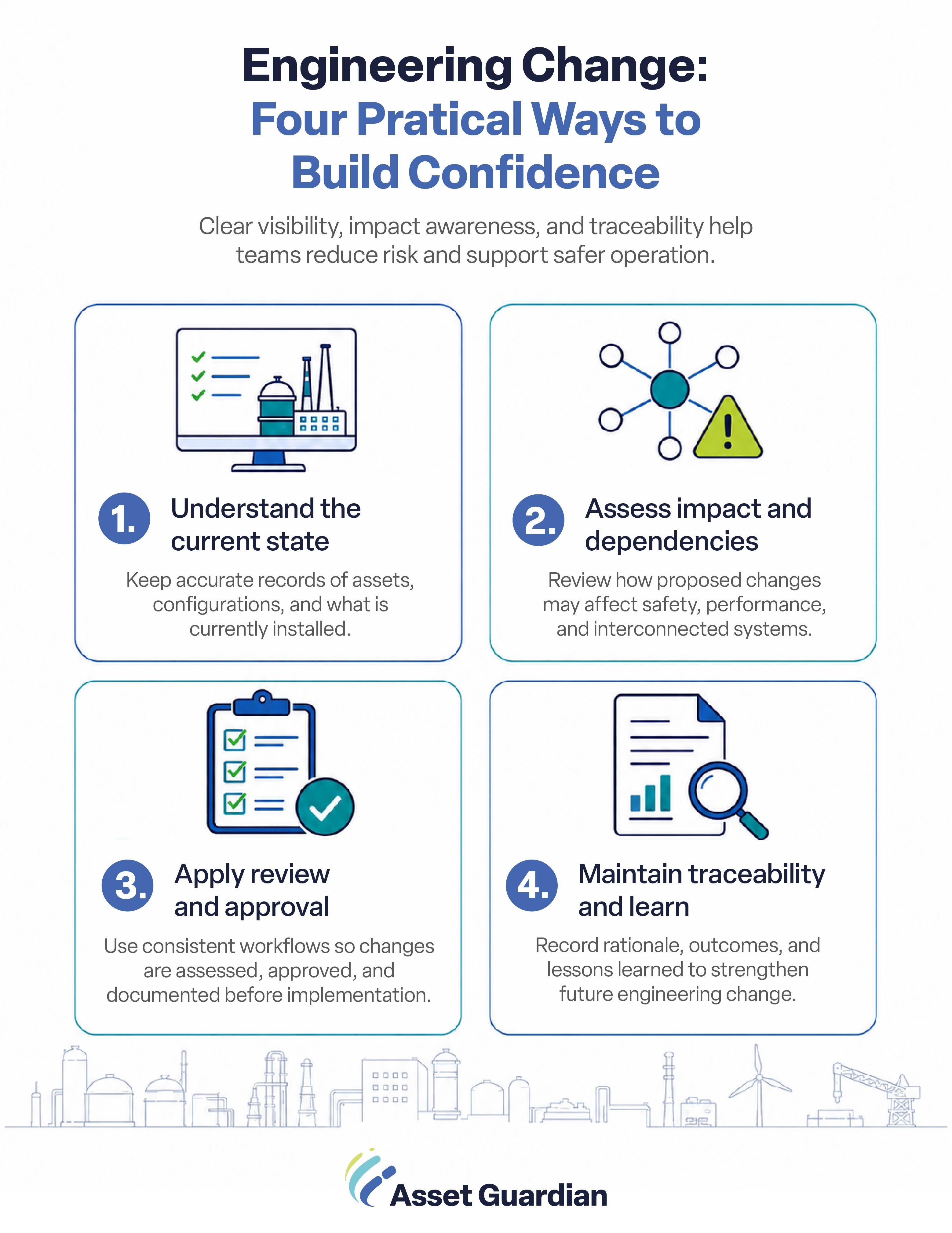
- Maintaining accurate and accessible records of assets and configurations
- Linking change activities to formal review and approval workflows
- Ensuring changes are traceable, including rationale and impact assessment
- Encouraging collaboration between engineering, maintenance, and OT security teams
- Reviewing completed changes to capture lessons learned and reduce future risk
These measures help teams assess risk more effectively and make informed decisions before changes are implemented.
Engineering Change and Safer Operation
Confidence in engineering change comes from understanding. When teams can see what they are changing, why it matters, and how it fits within the wider system, they are better positioned to protect safety, reliability, and operational continuity.
In complex industrial environments, managing change is not about eliminating risk, but about making risk visible and manageable. Clear change management practices support safer operation by reducing uncertainty and strengthening organisational discipline.
Asset Guardian works with organisations operating complex IACS environments to improve visibility, control, and confidence across engineering change and asset management processes. Our focus is on supporting safer, more predictable operations through clearer information and structured oversight.
To discuss how Asset Guardian can support clearer engineering change control, contact our team.