



Configuration change | 10 March 2026
Improving Configuration Control to Support Safer Operation
Published by Asset Guardian
Industrial environments evolve over time, making it difficult to maintain clear visibility of system configurations and changes. Effective configuration control helps organisations reduce operational risk, improve audit confidence, and support safer operation.
The Growing Complexity of Industrial Operations
Industrial operations depend on complex combinations of hardware, software, and processes working together reliably. In upstream Oil and Gas and other asset intensive industries, these environments often evolve over decades, shaped by upgrades, vendor changes, and operational pressures. Over time, this complexity can make it difficult to maintain clear oversight of how systems are configured and how changes affect safety and reliability.
Configuration control plays a critical role in supporting safer operation. When organisations have a clear understanding of what assets they operate, how they are configured, and how changes are managed, they are better positioned to reduce unintended consequences and operational risk.
Why Configuration Control Matters

Configuration control refers to the disciplined management of system components, versions, and settings throughout their lifecycle. This includes control systems, software versions, firmware, network connections, and supporting documentation.
Without effective configuration control, organisations may face challenges such as:
- Uncertainty about which versions of systems are installed and supported
- Difficulty assessing the impact of engineering or maintenance changes
- Increased risk of configuration drift over time
- Reduced confidence during audits, incidents, or investigations
These issues do not typically arise from a single failure, but from gradual loss of visibility as systems evolve.
Common Challenges in Industrial Environments
Many organisations operate mixed estates that include both modern and legacy assets. In these environments, configuration information is often fragmented across spreadsheets, documents, and individual team knowledge. Changes may be well intentioned but insufficiently documented, particularly during outages or urgent maintenance activities.
Additional challenges include:
- Limited ownership of configuration data across engineering, maintenance, and OT security teams
- Manual processes that rely on individual discipline rather than structured controls
- Difficulty maintaining accurate records during contractor or vendor led work
- Inconsistent application of change management practices
Over time, these gaps can make it harder to understand the true operational state of critical systems.
Supporting Safer Operation Through Better Control
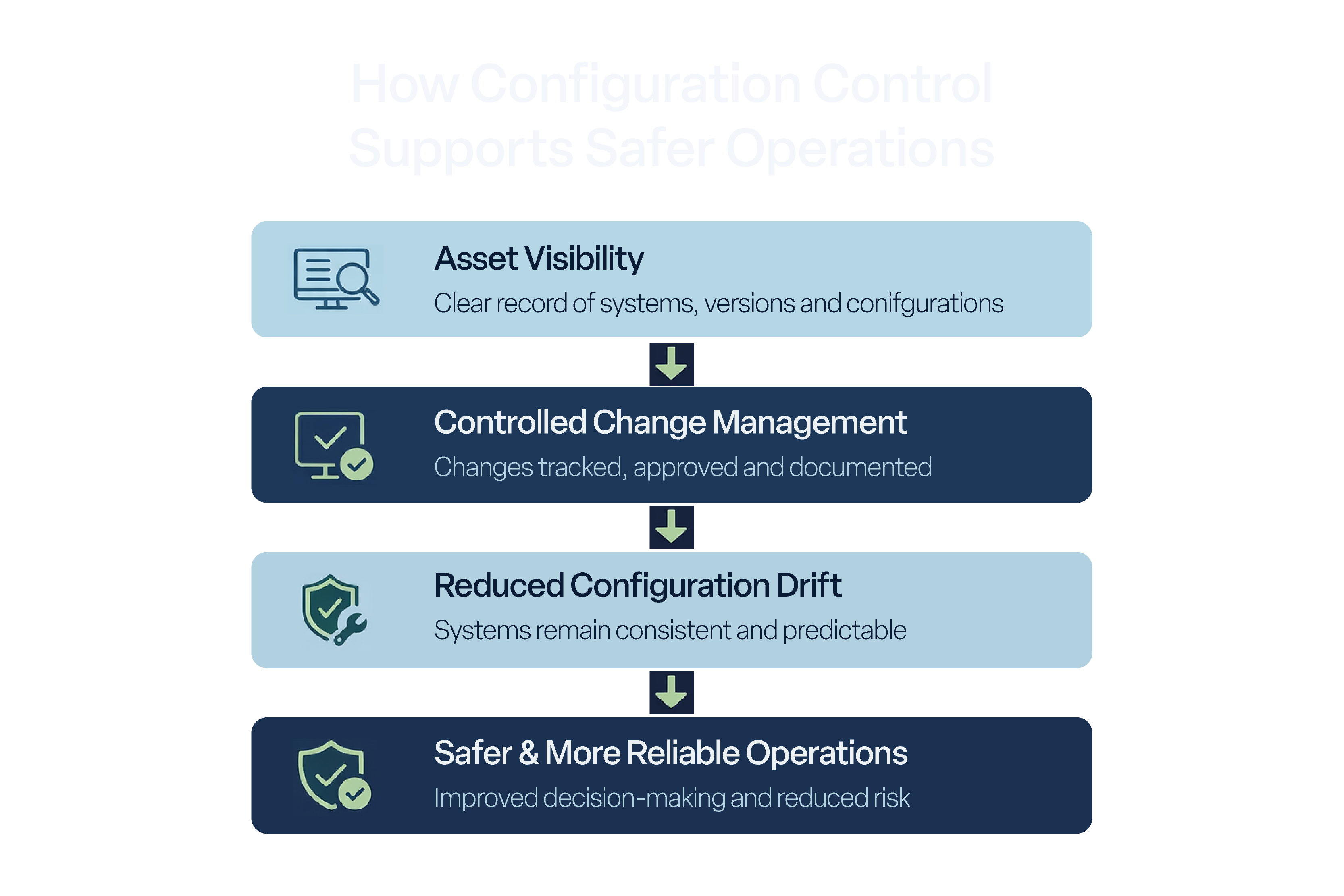
Improving configuration control does not require organisations to slow down operations or introduce unnecessary bureaucracy. Instead, it involves creating clearer visibility and more reliable processes that support existing safety and engineering practices.
Practical steps may include:
- Establishing a central, trusted record of assets, configurations, and versions
- Linking configuration data to formal change management and approval processes
- Ensuring changes are traceable, including who made them and why
- Regularly reviewing configurations to identify drift or undocumented changes
- Aligning configuration control with safety, maintenance, and cyber security objectives
When configuration information is accurate and accessible, teams can make better informed decisions and respond more effectively to both planned and unplanned events.
Configuration Control and Operational Confidence
Strong configuration control supports more than compliance or record keeping. It contributes to operational confidence by helping teams understand their systems, manage risk, and learn from past changes. During audits, incidents, or regulatory reviews, reliable configuration records provide essential context and reduce uncertainty.
In complex industrial environments, safer operation is rarely achieved through technology alone. It depends on clear processes, shared understanding, and disciplined execution across the organisation.
At Asset Guardian, we work with organisations operating complex IACS environments to improve visibility, control, and confidence across asset and configuration management. Our experience across critical industries helps teams strengthen operational foundations while supporting safe and reliable performance.
If you would like to discuss how improved configuration control can support safer operation in your organisation, please get in touch.